

The old world
We sold to humans.
Revenue teams learned the path: earn a champion, map the buying committee, reach the economic buyer, clear procurement, and build the relationships that carry a decision.
Buying decisions now move through people and AI. Adrata is the AI for revenue leaders and AEs built to sell to both—unifying the data, mapping the whole decision group, and showing the game-theory optimal move.
Not ready for a demo? Get the free AI prompt pack or see pricing. How is SRM different from CRM?
The Starfield workspace: revenue leader Nico Sylvester’s team — $22.9M current-quarter commit, $91.6M current-quarter pipeline, 4.0x coverage, a 48% team win rate, and today’s leadership priorities. This is the product itself, running on a fictional demo workspace — drag the window, open a deal, read a thread.

The old world
Revenue teams learned the path: earn a champion, map the buying committee, reach the economic buyer, clear procurement, and build the relationships that carry a decision.
The old world, harder
The room kept growing. A committee instead of a buyer, each one arriving with research nobody in sales ever saw. Hard, expensive, political—and still a room full of humans you could learn to read.

The new world
Buyers use AI to read our emails, compare vendors, test our claims, and shape the shortlist before the next human conversation.

The AI inbox
Before Priya opens her inbox, AI ranks every sales email against Volt’s active decision, moving the ones that resolve a live question above generic follow-ups. And it no longer stops at ranking: detectors like Pangram plug straight into Gmail and scan the message itself to judge whether a human wrote it.
Source · Pangram, an AI-writing detector with Chrome and Google Workspace integrations
The Inbox
The AI evaluation
Wes can drop in the Cybercross proposal and Volt’s requirements. AI extracts the claims, checks the cited evidence, and exposes the gap.
The Evaluation
The AI shortlist
Karen can compare Cybercross, the incumbent, and another vendor against one decision rubric before the next seller conversation.
The Shortlist
The attention shift
45% of B2B buyers used GenAI in a recent purchase. Nearly half of enterprise buyers already bring AI into the decision before the seller enters the room.
Pressure 1 · Rising Competition
Microsoft measured its own 2026 rollout of Claude Code and GitHub Copilot CLI and found engineers using them merged 24% more pull requests per day. The feature you were winning on last quarter is on their roadmap this one, and the buyer’s AI will compare you against it the moment it lands.
Source · Microsoft study of its 2026 coding-agent rollout: +24.0% merged PRs per engineer, per day
Merged pull requests · per engineer, per day
100
124
Without a coding agent
With Claude Code or Copilot CLI
+24% more merged work from the same engineer. Microsoft reported a likely range of +14.5% to +33.7%.
Pressure 2 · Rising Noise
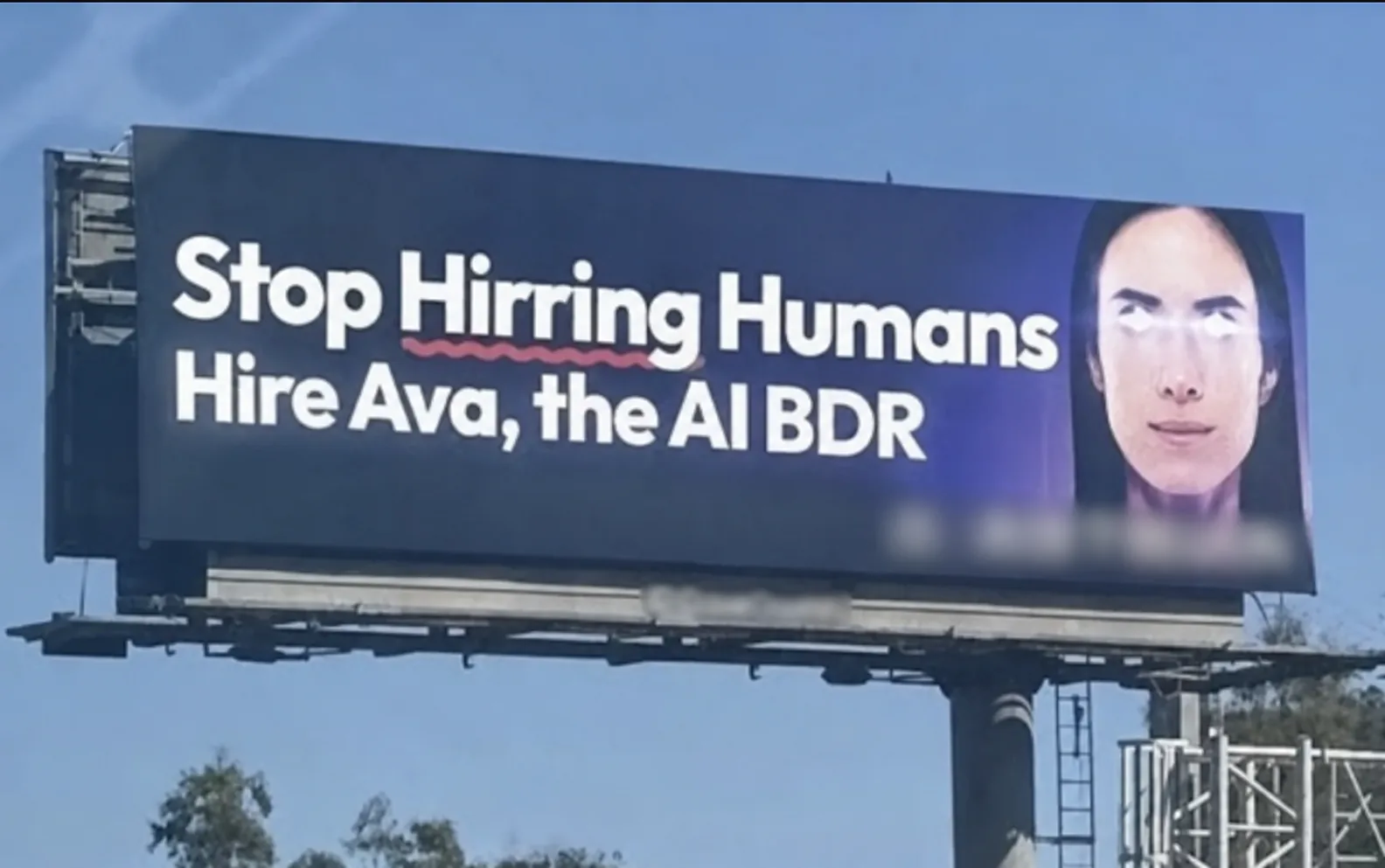
Companies are deploying AI to manufacture outbound at enormous scale. Buyers face more noise, their assistants filter more aggressively, and a credible seller has to earn attention before a human ever sees the message.
Pressure 3 · Rising Build Pressure
The question that used to end in a two-year roadmap now ends in a weekend prototype. Their AI will scope it, price it, and answer honestly—so the deal turns on what the buyer cannot build, and whether your seller can name it in the room.

The new problem
Access now depends on more than finding a champion. More people can decide or block, while AI ranks the email, tests the proof, and shapes the shortlist before the next call. Leaders see silence, delay, or loss—without seeing the hidden human-or-AI judgment that caused it.
The strategic question
The decision is more complex, the information is incomplete, and every move changes what the other players do next.
The Game Theory LLM
Chess engines fundamentally solved this class of problem: read the whole board, weigh how the position changes after each move, and find the one people miss. That machinery is exactly what a pursuit has always lacked.
The Environment
A game engine is only as strong as the position it can see. Adrata joins the CRM, the mailbox, the calendar, the buyer-room graph and the live signals into a single environment—so the move is computed against the whole account rather than the last activity someone logged.
One environment
The position the engine reads before it names a move.
The Players
Claude, ChatGPT, Gemini and Copilot are already in the room—reading the email, testing the claims, ranking the shortlist. Adrata treats them as players on the board and learns what each one needs to see, because we are no longer selling to companies of people. We are selling to companies of people and a thousand agents.
Not integrations. Participants — each one reading your account before a human does.
01 · The answer to parity
When a competitor can ship your feature in a quarter, the account itself is the edge. Adrata holds who decides, what they already believe, what is blocking consensus, and the sequence that moves the group—none of which arrives in anyone’s release notes.
02 · The answer to noise
Volume is free now, so relevance is the only key that still works. Adrata finds the trigger, the person it genuinely matters to, and the proof that answers a live question—so the message survives the assistant and earns the human.
03 · The answer to build-vs-buy
Their team can build a dashboard. It cannot build the buyer room, the relationship path, the evidence trail, or the intelligence that keeps working after launch—and Adrata hands the seller that argument with the account’s own facts attached.
Why this matters
Payroll, the roadmap, the next hire, the round—every one of them is downstream of somebody winning a deal. That job got materially harder this year, and almost nothing in the stack was built for the person doing it. Enable the seller to win and everyone standing behind them wins too.
One seller, one deal
Closed won.
AI for the Pursuit
The strategy layer for the hardest deals: one living read of the account, the entire decision group, the buyer-side AI, the evidence, and the next move. Leaders see whether the pursuit is real. Sellers know how to win it.
Built For The Pursuit
For the enterprise pursuits that can change the number—and the companies that refuse to leave a $10M decision to a CRM stage.
Customer · Pinpoint · CRO, JP McCorley
“For us at Pinpoint, Adrata is the Claude Code moment for revenue. Bring it a real account and it starts working the pursuit with you—showing you who matters, where the deal is exposed, and what deserves attention next. It feels less like a tool you have to operate and more like having an exceptional operator in the room.”
JP McCorley
CRO, Pinpoint

“I’m not sure how this works, but it’s the future. My team just walks in already knowing who actually matters, and the whole pipeline moves faster because of it.”
 John DanoCRO, Scientific Selling Group
“Invaluable. The strategy generated was transformative. Traack.ai is a different company after harnessing Adrata.”
 Ousmane KabreCEO, Traack.ai
“Ross and the Adrata team understand revenue at a level most CEOs never see. Built by operators who have actually closed enterprise deals.”
 Tiffany LargieCEO, MORE
“We stopped guessing who matters in every deal. Adrata shows us the committee and the route to the people who need to believe.”
 Justin JohnsonCEO, CloudCaddie
“The buyer room maps alone are worth 10x what we pay. It’s clearer than ever, knowing exactly who matters in each deal.”
 Ryan SerratoCOO, Notary Everyday
“Security and compliance were non-negotiable for us. Adrata met every requirement our team put in front of them, and the onboarding was the smoothest we have experienced with any sales tool.”
 Jeff CramerSales Trainer, Perceptive Learning
“We signed our biggest customer only weeks after using Adrata, and for the first time the whole team knew exactly who to bring in and when.”
 Andrew JonesFounder, Iceberg Labs
“Adrata is fundamentally changing how we approach business development by clearly identifying the true buyer room behind each account. Instead of chasing dozens of contacts, we focus our outreach strategically.”
 Victoria LelandAE, Top Engineering Plus
“The team behind Adrata is the best I’ve worked with. They get how revenue actually works, and they show up for you like it’s their own deal.”
 Matt GilCOO, DTDT
AI for the Pursuit
AI for revenue leaders and AEs—from choosing the pursuit to making the move that closes. Every stage shares the same buyer-room context, evidence, and strategy.
01 · Target
Combine ICP fit, timing, history, and evidence so sellers start where a real decision can form.
02 · Trigger
Identify the business change, internal pressure, or decision event that makes this pursuit timely.
03 · Enter
Start with the person, problem, and moment most likely to create a credible path into the account.
04 · Strategize
Plan the pursuit from first attention through belief, consensus, approval, and close—not just the next seller action.
05 · Understand
Reveal who matters, who is missing, and who can approve, fund, influence, or quietly block the deal.
06 · Access
Surface the relationship path to each buyer instead of leaving the seller trapped behind one champion.
07 · Interpret
Use sourced communication, workflow, and public evidence to infer which assistants and models are involved, with confidence attached—then adapt the strategy, proof, format, and route for how they retrieve, rank, and scrutinize information.
08 · Engage
Give the buyer—and their AI—the relevant message, credible proof, and clear reason to respond.
09 · Coordinate
Sequence the business case, technical proof, security review, procurement path, and executive decision as one pursuit.
10 · Verify
Separate visible activity from decision-making spread, then inspect buyer coverage and risk before calling the forecast.
11 · Forecast
Verify buyer coverage, approval risk, and missing proof before a leader accepts the CRM stage as truth.
12 · Advance
Put the route, message, proof, next action, and source trail in the seller’s hands through procurement.
AI In The Buyer Room
Communication, workflow, and public evidence can indicate the likely assistant and confidence level. Adrata uses that signal to understand how buyer-side AI may retrieve, summarize, compare, and challenge evidence—then adapts the message, proof, citations, format, and route. Custom instructions, memory, connected tools, and enterprise configuration can change any individual result, so every inference remains sourced, confidence-aware, and non-deterministic.
Work-graph grounded
Make the proof easy to retrieve, summarize, and preserve inside the work graph.
Memory, files, and connected context
Expect direct claim comparison. Cite the evidence and make the decision rubric explicit.
Project knowledge and long-context work
Keep the full proposal internally consistent and make every important claim traceable.
Connected-source synthesis
Use clear source names and structured proof that survives cross-document synthesis.
Current-web and public-proof oriented
Make public proof current, verifiable, and consistent with the material sent privately.
Bring Us The Pursuit
Bring Adrata a forecasted account. Leave with the missing people, proof, route, and next move.
Get started here
Start with one forecasted account. Adrata connects the record to the buyer room and opens the next-move checklist the same day.
Pick the forecasted account
Start with the deal the team cannot afford to lose.
Connect CRM
Bring in the account, owner, stage, history, and activity.
Map the buyer room
Reveal power, missing approvers, blockers, and routes in.
Open the next-move checklist
See the route, message, proof, and next action.
Roll out to the team
Give every seller the same live pursuit context.
Why we started Adrata
A champion creates momentum. A champion does not create the decision. The decision moves through finance, security, legal, procurement, operators, and the executives who can quietly stall a deal that looks healthy in your CRM.
That is where forecasts break. The rep has activity, the manager has a stage, the CRO has a number, and the people who actually approve, block, or fund the deal were never in the room. The deal was never as real as the pipeline said it was.
It is not a data problem. Your CRM is full. It is a visibility problem: the room that decides is invisible, so the work happens to the contacts you already know instead of the people who actually sign.
Adrata makes the room visible across every sales account. See who is engaged and who is missing. Read the politics: who holds power, who can block, who needs proof before they will move. Then turn that read into the route, the message, the proof, and the next move your team can run today.
And every move is sourced and inspectable. A rep knows who to reach next and why. A manager knows whether a deal is single-threaded or truly covered. A CRO knows which commits are real before the board ever asks.
That is the difference between activity and access. Activity fills a pipeline. Access wins the deals you cannot afford to lose.
Free — no call required
5 prompts our own team runs on live deals. Use them in whatever assistant you already have — every one works without Adrata. They open on this page the moment you enter your email, so there is nothing to wait for.
Bring the forecasted account that matters most. We will show the route in, the buyer-room risk your team cannot see, and the coaching move that can still change the outcome.